Design preview 01 · What it does to the tree 02 · Before anything comes down Make it yours →
SCROLL

A big tree and a small garden.

Tree surgery across Calderdale, from Sowerby Bridge. Nobody rings up asking for a crown reduction. They ring because the tree is too big, or it is dropping branches on the car.

So before anything else, here is what each job actually does to a tree — on one tree, next to one house, at the size it really is.

01 THE PROBLEM

Most of what gets rung in about is one of two things.

It has outgrown the garden, or it is dropping bits. A tree like this one — nine and a half metres, five off the gable — is a normal Calderdale back garden, and it is also most of the phone calls.

A photo with a wheelie bin or a back door in it saves a lot of guessing about scale, which is the thing that is hardest to describe down a phone.

The price follows three thingsThe access, the height, and what is sitting underneath it.
02 CROWN REDUCTION

Usually the answer to what people wanted felling for.

Height and spread come off while the shape stays, so the tree is still a tree. Watch the canopy pull back off the roofline without the outline changing — that is the whole skill in it.

Plenty of trees people want felled do not need it. If the honest answer is to leave it alone, that is what you will be told.

It is not a haircut you can undoTake too much and the tree answers with a thicket of weak regrowth, so a reduction is measured rather than guessed.
03 THINNING AND LIFTING

When the garden is in shade, the tree does not have to go.

Thinning takes a proportion of the growth out of the canopy so light comes through it. Lifting takes the lower limbs off so you can walk and mow underneath.

The outline barely changes. Look at the shadow on the lawn rather than at the tree — that is where the difference shows, and it is what people are actually asking for.

Same tree, more lightBoth jobs leave the shape alone, which is why they are the ones most often worth doing first.
04 DEADWOODING

The small job most worth doing early.

Dead limbs come out before they come down on a car, a greenhouse or somebody's head. They are the grey ones — easy to miss from the ground in summer, obvious from a rope.

It takes nothing off the live tree and changes nothing about how it looks from the house. It is simply the difference between a branch you chose to remove and one that chose its own moment.

A short visit, not a dayWhich is why it is worth asking about alongside anything else being done.
05 FELLING, IN SECTIONS

Climbed and rigged down, not dropped.

There is no room to fell this one whole, so it comes down in pieces on a rope, from the top. Each section is cut, held, and lowered rather than let go.

It takes longer than dropping a tree in a field, and it is the difference between a tidy garden and a flattened border. On a tight plot it is usually the only sensible way.
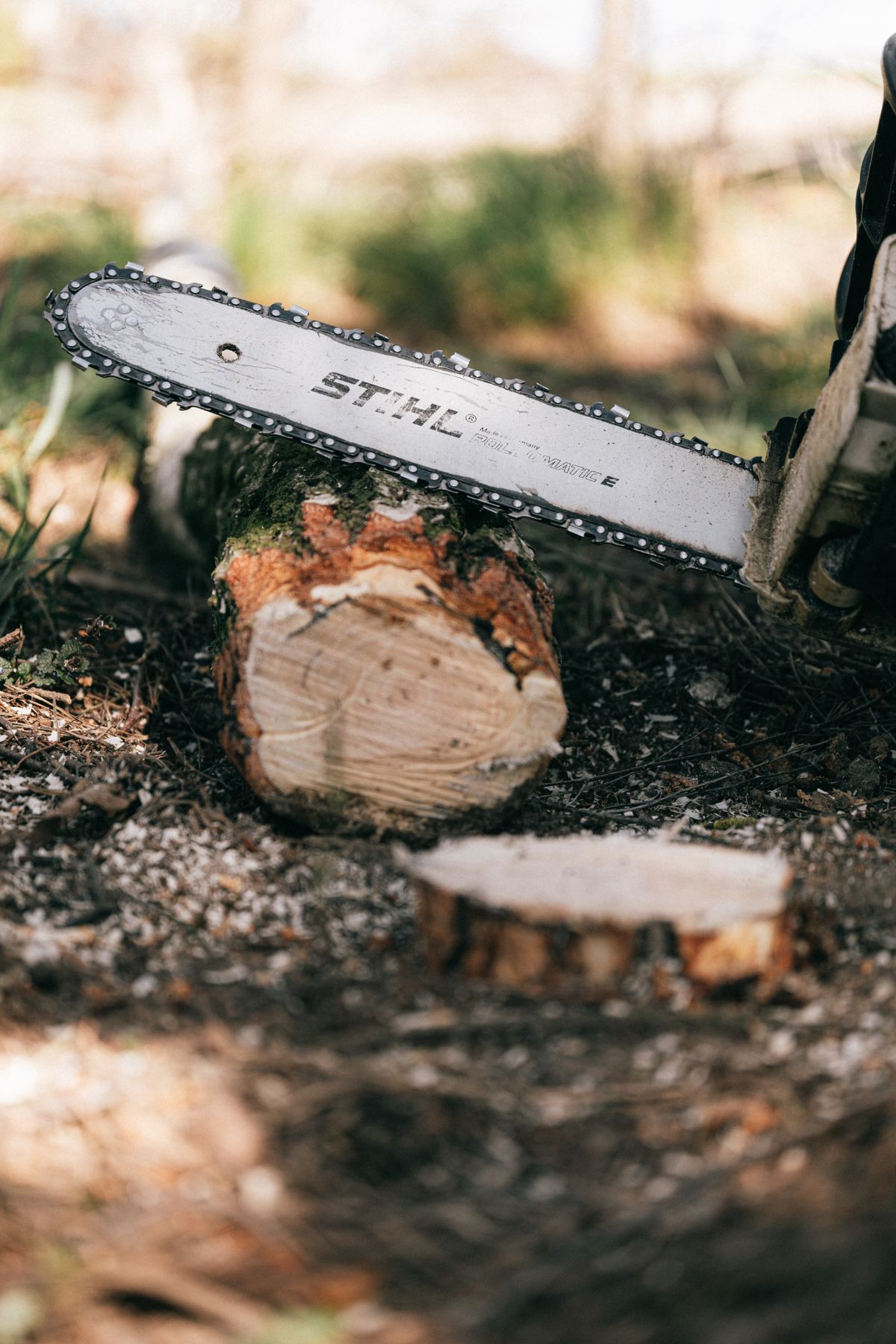
Then the stumpGround out below ground level afterwards, so you can turf, pave or plant over the top of it.
06 TRY IT YOURSELF

Pick a job and look at what is left.

HOW A JOB GOES

Nothing gets quoted off a phone call alone.

Six stages, in the order they happen. If yours does not look like this, ring and say so — storm damage and anything hanging over a road jumps the whole queue.

01 · You ring and describe it

Roughly how tall, how close to the house, and what is worrying you. A photo with something in it for scale saves a lot of guessing.

02 · Somebody comes and looks

Plenty of trees people want felled do not need it, and a reduction or some deadwooding solves the actual problem. If the honest answer is to leave it alone, that is what you will be told.

03 · The paperwork gets checked

Calderdale Council is asked whether the tree carries a preservation order or stands in a conservation area. Cutting a protected tree is an offence, and it is the owner who answers for it.

04 · A written quote

What is coming off, what is staying, where the timber goes and how many days it takes. Ask to see the insurance while you are at it — any tree surgeon worth using expects to be asked.

05 · The day itself

Ropes and a harness rather than a machine parked in the borders. Sections get lowered on a rope instead of dropped where there is a fence, a greenhouse or a shed underneath.

06 · It gets cleared up

Brash goes through the chipper. Timber is cut to length and stacked by the shed if you burn it, or taken away if you do not. The lawn gets raked before we leave.

Before you fell anything: trees in a conservation area need six weeks' notice to Calderdale Council, and a preservation order needs consent. We check for you, but the responsibility sits with whoever owns the tree. Birds nest from roughly March to August, and an active nest stops work on that tree until the young have flown.

ASK ABOUT A TREE

Ring and describe it, or send the height and how close it is.

Anything hanging over a road or a roof is a phone call, not a form. Everything else, send the rough height, how close to the house, and a photograph with something in it for scale.

Covering Sowerby Bridge, Halifax, Hebden Bridge, Elland, Ripponden and the villages between.

A tree surgeon working in a tree with ropes and a harness

Attwater Arboriculture replies quickly